

When the Seasons Change: Practicing Herbalism in Autumn
Medical Disclaimer: The information provided in this blog series is for general knowledge and educational purposes only. It is not intended to diagnose, treat, cure, or prevent any disease or medical condition. Always consult with a qualified healthcare provider before beginning any new herbal regimen or making significant changes to your health routine, especially if you are pregnant, nursing, have a chronic illness, or are taking prescription medications. Use herbs responsibly and in consultation with trusted professionals.
There is a moment each year when summer begins to loosen its grip.
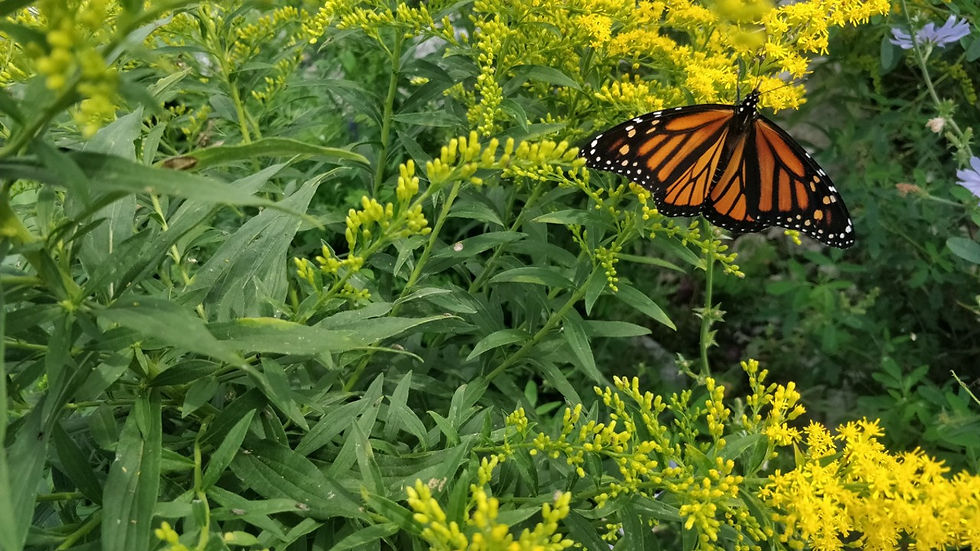
It rarely happens all at once. The afternoons may still be warm, but the mornings feel different. Shadows grow a little longer. Goldenrod appears along roadsides. The garden begins producing differently, and somewhere overhead the first migrating birds remind us that another season is already on its way.
By September, we can feel the change even if the calendar insists that summer isn't quite finished.
For those of us who practice herbalism, these seasonal transitions offer an invitation: to pay attention.
Herbalism is often presented as a collection of plants and their uses. Have a particular concern? Find the herb associated with it. Learn its properties. Put it in a tea, tincture, capsule, or salve.
There is certainly value in knowing individual herbs well.
But herbalism can be something larger.
It can be a way of noticing how we live within the natural world—and recognizing that our needs aren't necessarily the same in January as they are in July.
What Does Seasonal Herbalism Mean?
Seasonal herbalism doesn't require a complicated system or a different cabinet full of herbs every three months.
At its simplest, it means allowing the season to influence how we care for ourselves.
Think about summer.
Our gardens overflow with fresh plants. We eat tomatoes still warm from the sun. Cucumbers, berries, melons, fresh herbs, and other water-rich foods seem perfectly suited to hot afternoons. We spend more time outdoors. Daylight stretches well into the evening, and life often follows that longer rhythm.
Then autumn arrives.
Temperatures begin to fall. Daylight decreases. Gardens slow. Our kitchens begin to smell different.
Soups return to the stove. Root vegetables appear more frequently on the table. We reach for cinnamon, ginger, rosemary, sage, thyme, garlic, and other deeply aromatic plants.
Without necessarily calling it herbalism, many of us are already responding to the season through plants.
That is worth noticing.
Autumn Is a Season of Transition
We sometimes talk about the four seasons as though nature simply flips a switch.
Summer ends.
Autumn begins.
Winter follows.
Nature is rarely that tidy.
September can give us an 85-degree afternoon followed by a morning cool enough for a sweater. The garden may still be producing summer vegetables while leaves begin changing overhead.
Our own lives often mirror that transition.
Summer schedules give way to school, meetings, community events, and fuller calendars. Vacations end. Holiday preparations begin appearing somewhere on the horizon. We start spending more time indoors.
Instead of fighting that transition, seasonal living asks us to notice it.
Maybe the evening iced tea becomes a warm cup of herbal tea.
Maybe dinner becomes a pot of soup that can simmer while we finish the day's work.
Maybe we begin going to bed a little earlier as darkness arrives sooner.
Maybe the herbs we reach for begin to change too.
None of this requires a rigid autumn wellness program.
It simply requires attention.
Three Ways Herbalism Changes in Autumn
We Begin to Preserve
For much of the growing season, abundance surrounds us.
Autumn reminds us that abundance doesn't last forever.
This is when much of the work of the garden begins moving indoors. Herbs are dried. Seeds are collected. Roots may be harvested. Tinctures are started. Oils are infused. Jars are labeled and tucked onto shelves.
Preservation is one of the oldest expressions of seasonal herbalism.
When we dry mint, tincture fresh herbs, preserve food, or save seeds, we're taking something available in one season and carrying it forward into another.
There is something wonderfully practical about that.
A jar of dried herbs on a January shelf is September remembered.
We Return to the Kitchen
The kitchen may be one of the most overlooked places where herbalism happens.
Herbs don't have to arrive in dropper bottles to become part of our relationship with plants.
Rosemary tossed with roasted vegetables is an herb.
Thyme simmering in soup is an herb.
Cinnamon stirred into oatmeal is an herb.
Ginger steeped in hot water is an herb.
Garlic, sage, fennel, bay, oregano, and countless other plants have lived at the intersection of food and traditional herbal practice for generations.
Autumn naturally invites many of these plants back into our daily routines.
Rather than asking, "Which supplement should I take this fall?" we might occasionally ask a simpler question:
Which plants can I bring back into my kitchen?
That's herbalism too.
We Prepare Rather Than React
Nature spends autumn preparing.
Trees withdraw resources from their leaves. Perennial plants move energy toward their roots. Squirrels gather food. Honey bees organize their winter stores and make use of the final warm days.
There is a lesson in that.
Autumn gives us time to prepare before winter arrives.
That might mean checking the herbs in the home apothecary, but it can also mean paying attention to sleep, eating nourishing meals, spending time outdoors while the weather allows it, and creating routines that will carry us through shorter days.
Preparation doesn't need to come from fear of winter.
It can simply be part of living seasonally.
There Isn't an "Autumn Herb"
It's tempting to turn seasonal herbalism into another list.
Five Herbs You Need This Fall.
But that's not really the point.
There is no single herb that everyone needs simply because September arrived.
One person may find themselves reaching for calming herbs as their schedule becomes busier. Someone else may be interested in supporting digestion as their diet changes.
Another person may simply enjoy a cup of peppermint tea in the evening.
Our bodies, circumstances, medications, health histories, and needs are different.
Good herbalism leaves room for that individuality.
Rather than beginning with the herb, we can begin with observation.
How am I sleeping?
What am I eating?
How has my schedule changed?
Am I spending enough time outdoors?
Do I feel rested?
What does my body seem to be asking for as the season changes?
Only then do we consider whether a particular herb or preparation belongs in the conversation.
Let the Garden Be the Teacher
One of the reasons I value growing herbs is that a garden makes seasonal change impossible to ignore.
A bottle on a shelf looks essentially the same in March as it does in September.
A living plant does not.
It emerges, grows, flowers, sets seed, declines, rests, and eventually begins again.
Working with plants in this way reminds us that dormancy isn't failure. Rest isn't wasted time.
Abundance isn't permanent, and neither is scarcity.
Everything has a season.
Perhaps that is one of herbalism's most important lessons.
The plants teach us about more than their constituents or traditional uses. They remind us that we are seasonal creatures too, even though modern life often encourages us to behave as though every month should look exactly the same.
A Different Kind of Autumn Preparation
As we move toward autumn, consider resisting the urge to completely overhaul your wellness routine.
Instead, notice.
Notice what is growing.
Notice what is fading.
Notice what you're cooking.
Notice when darkness arrives.
Notice whether your energy feels different than it did in June.
Make a pot of tea. Cook something slowly. Harvest what the garden is ready to give. Dry a few herbs. Take a walk on a cool morning.
Then allow your herbal practice to grow from those observations.
Seasonal herbalism isn't about following a prescribed list of plants for each month of the year.
It's about developing a relationship with the plants, the place where we live, and our own changing needs.
Autumn doesn't ask us to become someone different.
It simply reminds us that change is already happening.
And perhaps the first step toward living more naturally is learning to notice it.
At Verdigris Market Garden, we believe herbalism isn’t just a practice—it’s a lifestyle rooted in connection, care, and conscious choices. On our website, www.verdigrismarketgarden.com, you’ll find an ever-growing selection of plant-based apothecary, personal care, and wellness products, handcrafted in small batches with the herbs we grow right here on our off-grid urban farm.
For deeper guidance on bringing herbal wisdom into everyday life, check out my books: Everyday Herbal: Solutions for Natural Living and Herbal & Holistic Healthcare for Men—both available online and on Amazon.
Stay connected with us on Instagram, Facebook, and YouTube for daily inspiration, seasonal updates, and new videos from the garden and beyond.


Comments